
Address
Indonesia

 Join Our Event Pulau Kelapa Event (27 Sep, 2026)

Nature-Based Climate Solutions for Coastal Resilience & Empowered Communities.


By Admin
7th Sep, 2026
Mangrove
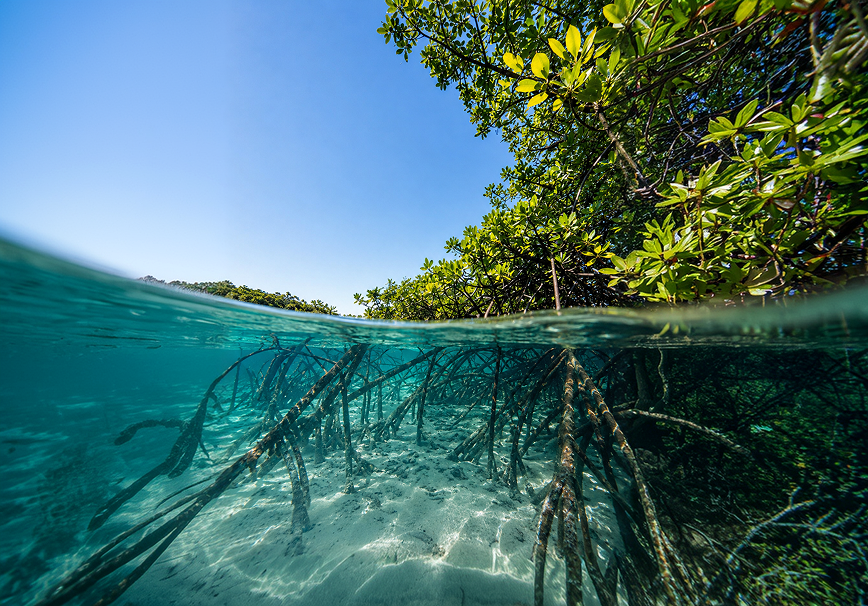
If you travel across the Thousand Islands (Kepulauan Seribu) today, you will see dense fringes of green mangroves tracing the borders of small islands. Field surveys show that existing mature stands remain in remarkably healthy condition—ranging between 76.7% and 100% vegetative health. At first glance, the ecosystem appears thriving and secure.
Yet, beneath this peaceful green canopy, a quiet crisis is unfolding. Strong seasonal tides, accumulating marine plastic debris, and rising sea levels continue to erode the shoreline foundation. Without active, science-based intervention, climate projection models reveal that parts of these low-lying islands risk slipping below the daily tideline between 2030 and 2100.
This highlights a fundamental truth in blue carbon restoration: A healthy-looking shoreline alone is not enough to guarantee long-term climate resilience. Protecting existing trees is vital, but true coastal defense requires restoring the ecological processes that keep island ecosystems standing against the sea.
— Regional Challenges and Coastal Risks
Beneath the serene surface, coastal ecosystems across the archipelago face continuous environmental pressure. Ocean currents swept marine plastic waste into root systems, choking fragile young shoots, while seasonal tidal surges, localized oil spills, and expanding coastal tourism steadily erode narrow shoreline boundaries. Climate projection models for 2030 to 2100 reveal severe risks from ongoing coastal erosion and land subsidence, which could submerge significant portions of these low-lying islands below the daily tideline without proactive restoration. Standing forests alone are not enough when the environmental foundation underneath them is eroding; protecting a canopy means little if the land beneath it is slowly slipping underwater.
— Priority Site Selection: Why Kelapa Island?
True climate resilience requires placing active restoration where intervention generates the highest measurable protection. In the Site Suitability Assessment, Kelapa Island emerged as the highest priority location with a top suitability score of 3.20 out of 4.00. Spanning just 13 hectares yet home to 7,716 residents, Kelapa Island is one of the most densely populated landmasses in the region. Its shallow, sheltered perimeters at 0–2 meters depth provide a safe environment protected from high-energy open waves and heavy boat propeller wakes. Restoring Kelapa Island's protective mangrove border is not merely a conservation effort; it is an urgent socio-ecological intervention to save a vulnerable human community from permanent land loss.
— Unlocking High-Yield Blue Carbon Through Smart Engineering
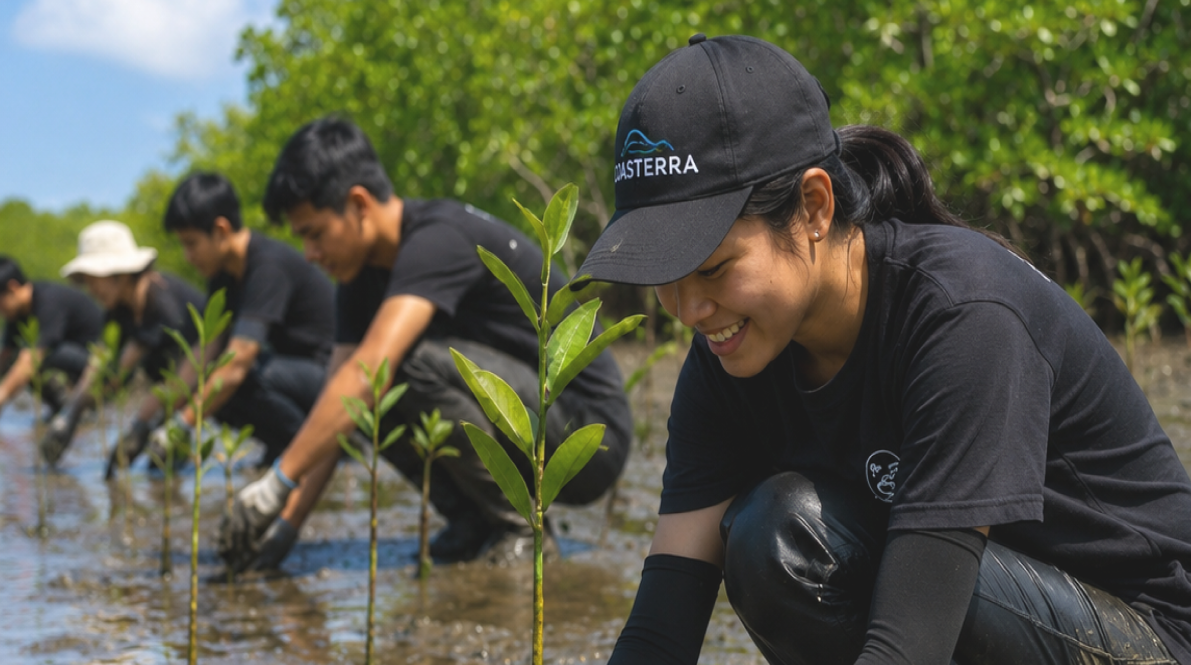
Unlocking the full potential of these coastal blue carbon sinks depends on deploying the right species with innovative planting technology. Dominant species like Rhizophora sp. hold massive carbon stocks ranging from 250–500 metric tons C/ha (exceeding 700 metric tons C/ha in mature stands), while pioneer species like Avicennia sp. store 150–400 metric tons C/ha while acting as frontline wave buffers. To ensure young seedlings survive aggressive ocean tides, traditional spread-out planting is replaced by the Clump System. By planting 500 seedlings in dense clusters within a 1×3 meter module with 1-meter spacing between clusters, the young trees break incoming wave energy together as a collective unit, boosting survival rates to 70%–80%.
— Implementation Is Where Resilience Is Built
A coastal assessment document outlines what is possible, but real climate resilience is built through year-after-year implementation on the ground. In the short term (0–1 year), dense mangrove clusters stabilize coastal soils, slow shoreline erosion, and create immediate green job opportunities for local villagers. Over the medium term (1–5 years), expanding root networks develop into thick storm buffers and rich fish nurseries that support sustainable eco-tourism. Over the long term (5+ years), a fully self-sustaining coastal barrier emerges, delivering long-term blue carbon storage, coastal disaster protection, and economic security for future generations.

Leave a Comment
Comments (00)
No comments yet. Be the first to leave one.